BrandKey: Putting Guardrails around AI for Brands
Ensuring On-Brand AI-Generated Outputs and Building a Foundation for AI-Powered Brand Management
Overview
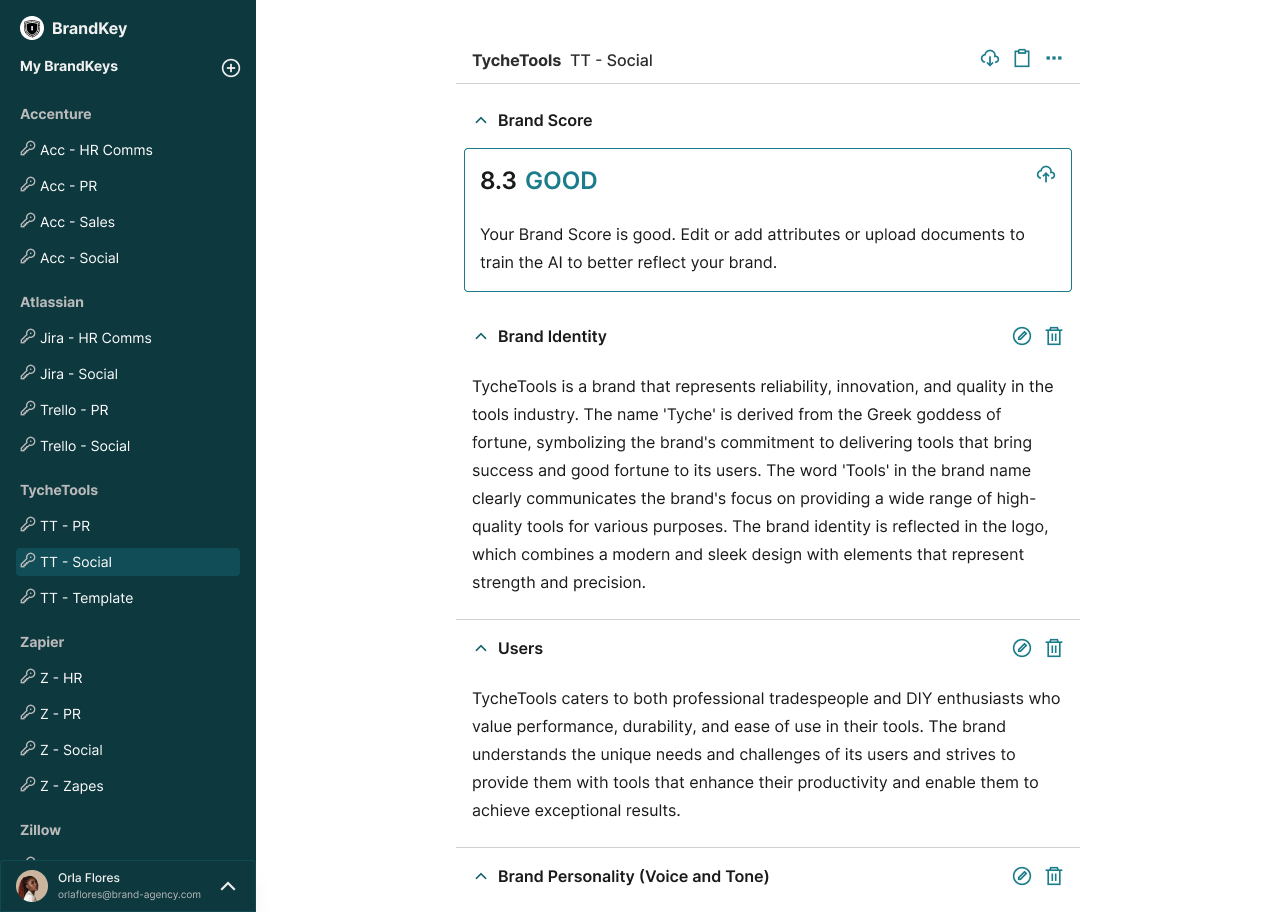
BrandKey addresses the challenge of maintaining consistent brand identity in AI-generated content. Our client was building a product called "Synthia," to be used in various corporate governance settings. As part of this, they needed a tool that would help their Brand Managers keep ad and other brand assets developed using AI on-brand and hallucination-free. The system would have the ability to score brand content against the brand's various elements.
As teams increasingly utilize AI tools like MidJourney to create brand assets, we recognized the necessity to embed brand identity directly into AI prompts. By using Robert Passikoff's BrandKey framework, we ensure that all AI-generated outputs remain consistent with a company's brand identity across various touchpoints.
The Challenge
BrandKey addresses the challenge of maintaining consistent brand identity in AI-generated content. As companies increasingly use AI tools like MidJourney to create brand assets, there is a risk that the outputs may deviate from established brand guidelines. By incorporating brand identity directly into AI prompts, BrandKey ensures that all generated assets are in line with the company's core values and messaging, thereby decreasing the requirement for extensive rework of AI-produced assets.
Our primary goals were to:
- Embed Brand Identity into AI Prompts: Develop a method for incorporating brand elements directly into AI prompts to ensure all AI-generated outputs align with established brand guidelines.
- Simplify Brand Management with AI: Create a user-friendly platform that allows team members to generate on-brand AI prompts effortlessly.
- Prepare for Future AI Integration: Lay the groundwork for Synthia's ongoing evolution, ensuring seamless integration of brand guidelines into future AI-powered features.
Our Solution: Providing AI with a Brand Framework
Creating a Platform for Consistent Brand Identity and AI Integration
BrandKey embeds brand identity into AI prompts to ensure consistent, on-brand outputs and reduce rework. This integration allows teams to generate high-quality, aligned content effortlessly, leveraging AI tools without compromising brand integrity.
BrandKey’s unique value stems from its ability to seamlessly integrate strategic brand management with advanced AI technologies. We ensured that the platform reflects our expertise in brand consistency, positioning BrandKey as a leader in providing AI guardrails that uphold brand integrity across diverse touchpoints, including marketing campaigns, design assets, and communications.
Embedding Brand Identity into AI Prompts
To maintain brand integrity in AI-generated assets, we developed a systematic approach to embed core brand elements directly into AI prompts. This ensures that all content produced by AI tools like MidJourney adheres to established brand guidelines, consistently reflecting the brand’s essence, values, and personality across all generated assets.
User-Friendly AI Prompt Generation for Brand Consistency
We designed an intuitive interface that allows team members to effortlessly generate on-brand AI prompts without requiring extensive technical expertise. This user-centric design simplifies the implementation of brand guidelines into AI tools, empowering users to create high-quality, consistent content efficiently. Comprehensive training and support materials were provided to ensure seamless adoption and effective use of the prompt templates.
Future-Proofing Brand Management with Synthia
BrandKey serves as the foundation for Synthia, our upcoming AI-powered brand management tool. By developing scalable and adaptable solutions today, we are ensuring that Synthia can seamlessly integrate future AI advancements, further enhancing our ability to maintain brand consistency and integrity as technology evolves. This strategic groundwork positions Synthia to lead the market in AI-driven brand management, offering automated enforcement of brand guidelines and continuous optimization based on user feedback and technological innovations.
How We Did It
- Lean Canvas
- User Interviews
- Story Mapping
- UI Design
Lean Canvas
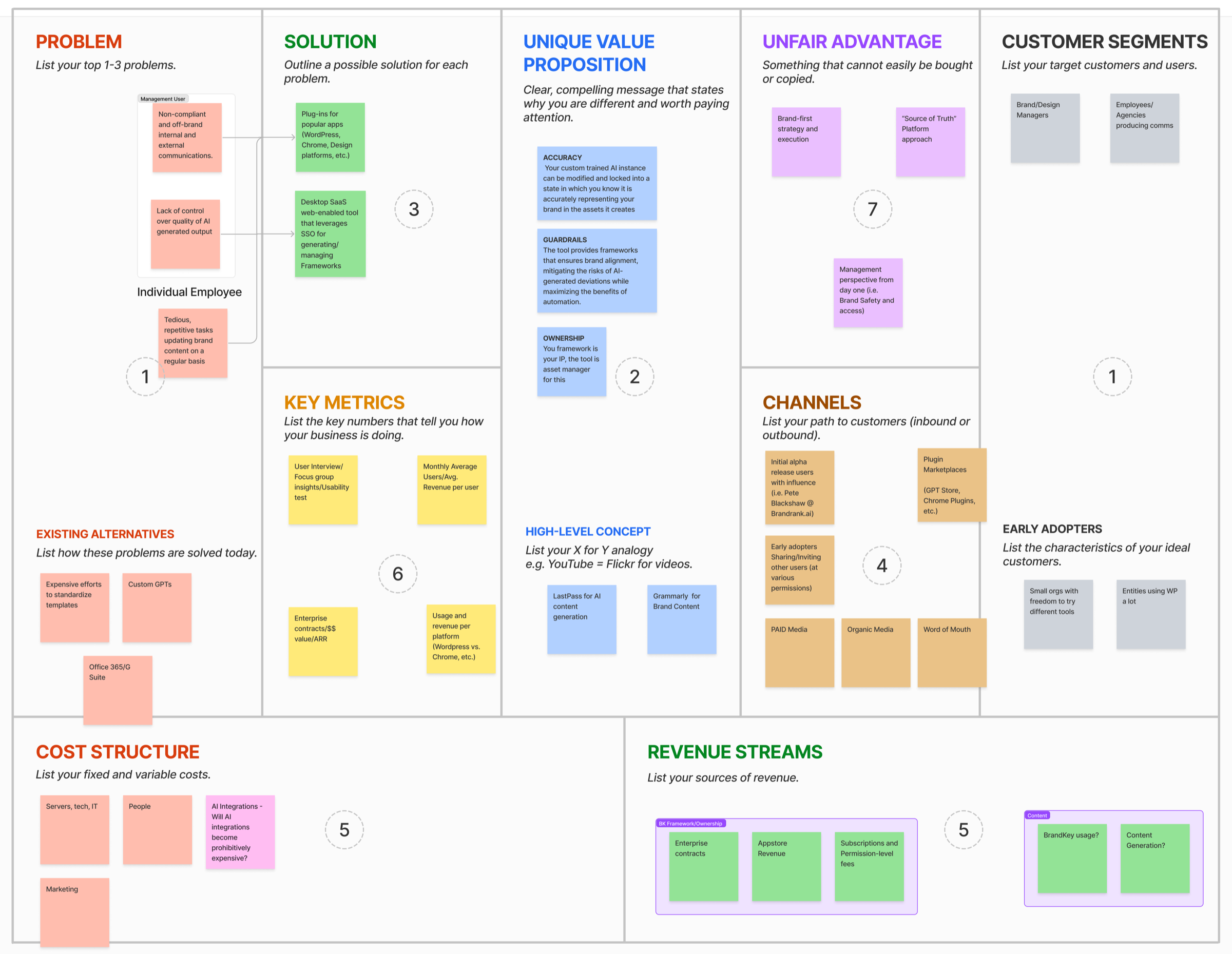
To navigate the fast-evolving AI workflow space effectively, we began by establishing a clear operational blueprint using the Lean Canvas framework. This strategic tool enabled us to systematically evaluate and validate the viability of BrandKey, ensuring that our product was well-positioned to meet market demands and achieve sustainable growth. By addressing critical components of our business model, we could make informed decisions before exploring solution options. The Lean Canvas process involved answering several key questions:
- Who are our potential users and what problems are we trying to solve for them?
- What is the Unique Value Proposition our product will provide?
- What is our proposed solution?
- How do we reach our users?
- What is our cost structure and what are our potential revenue streams?
- What key metrics will we need to track?
- What is our unfair advantage over other players in the space?
Through working with the Lean Canvas framework, we created a strategic roadmap that ensured BrandKey was aligned with market needs and poised for success. This foundational work validated our business model and guided the development of a robust, user-centered platform that addresses the specific challenges of maintaining brand consistency in an AI-driven content creation environment.
User Interviews
To ensure BrandKey effectively addressed our users' needs, we adopted a structured user interview approach. We started by defining clear research and interview questions to understand the challenges of maintaining brand consistency with AI tools and to uncover user expectations and workflow preferences.
From these interviews, we created Interview Snapshots—concise summaries featuring Quick Facts, Insights, Opportunities, along with a User/Customer Experience Map and a key quote to make the interview memorable. These snapshots provided our team with actionable insights to inform product development and ensure BrandKey remains aligned with user needs.
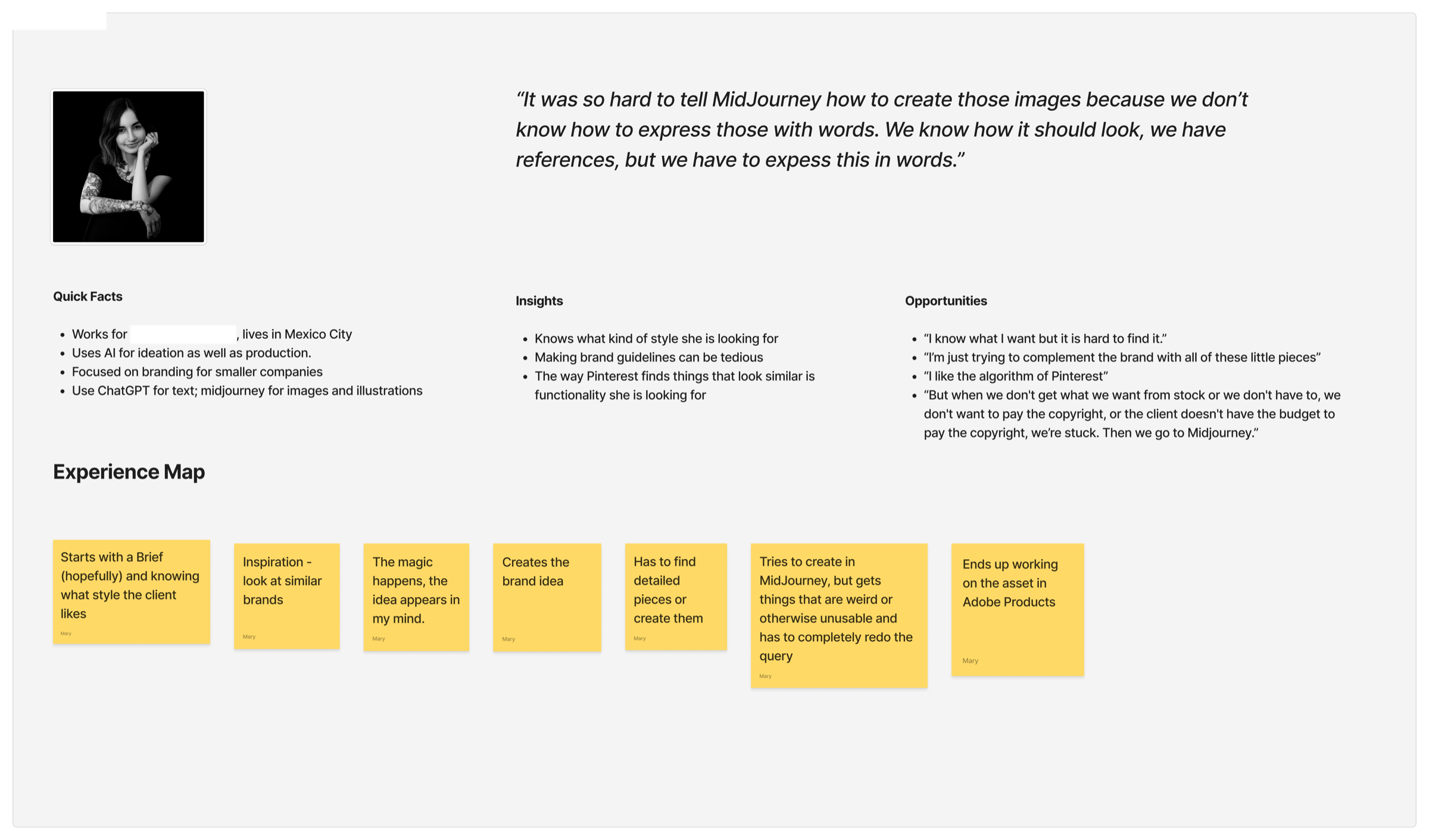
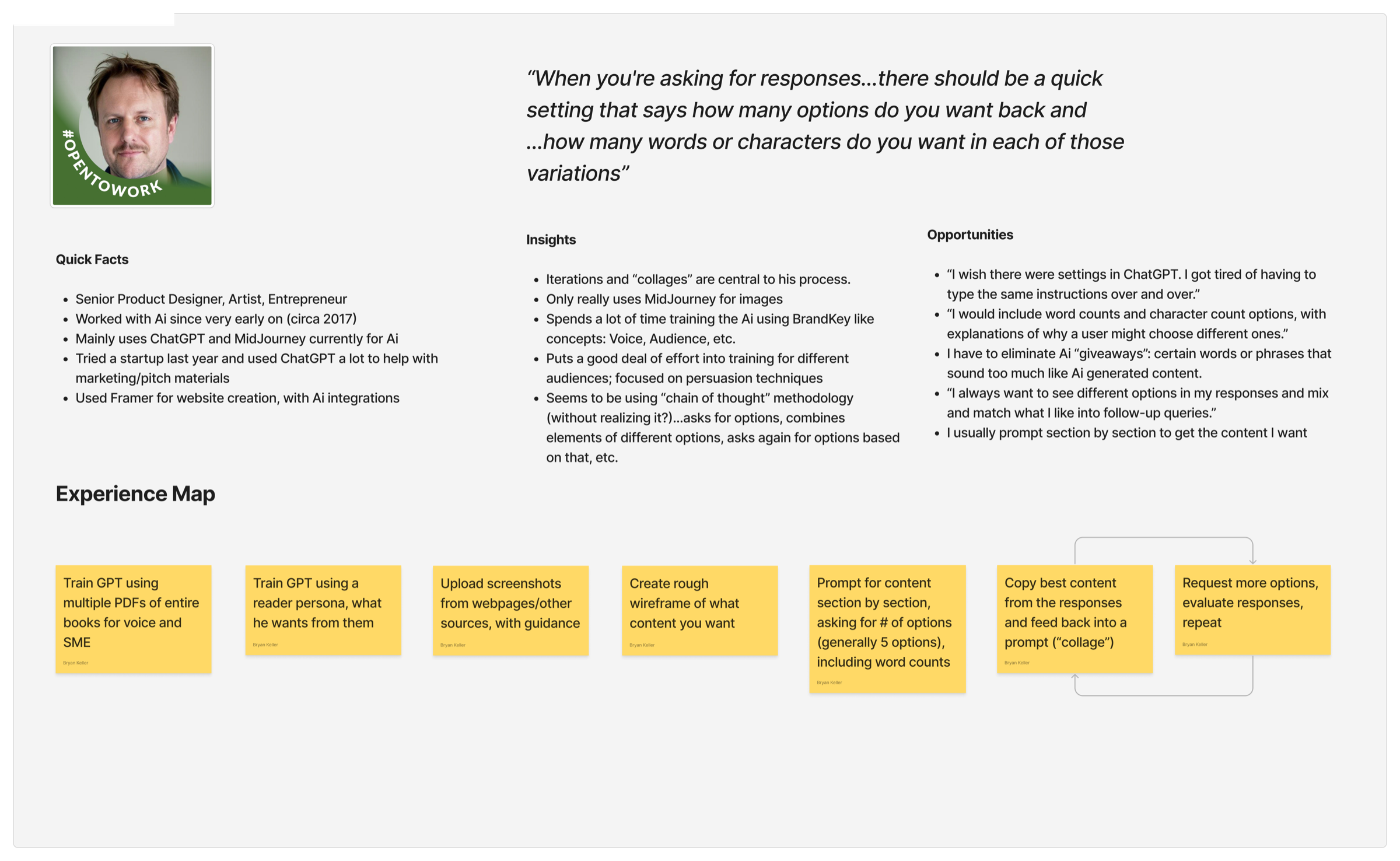
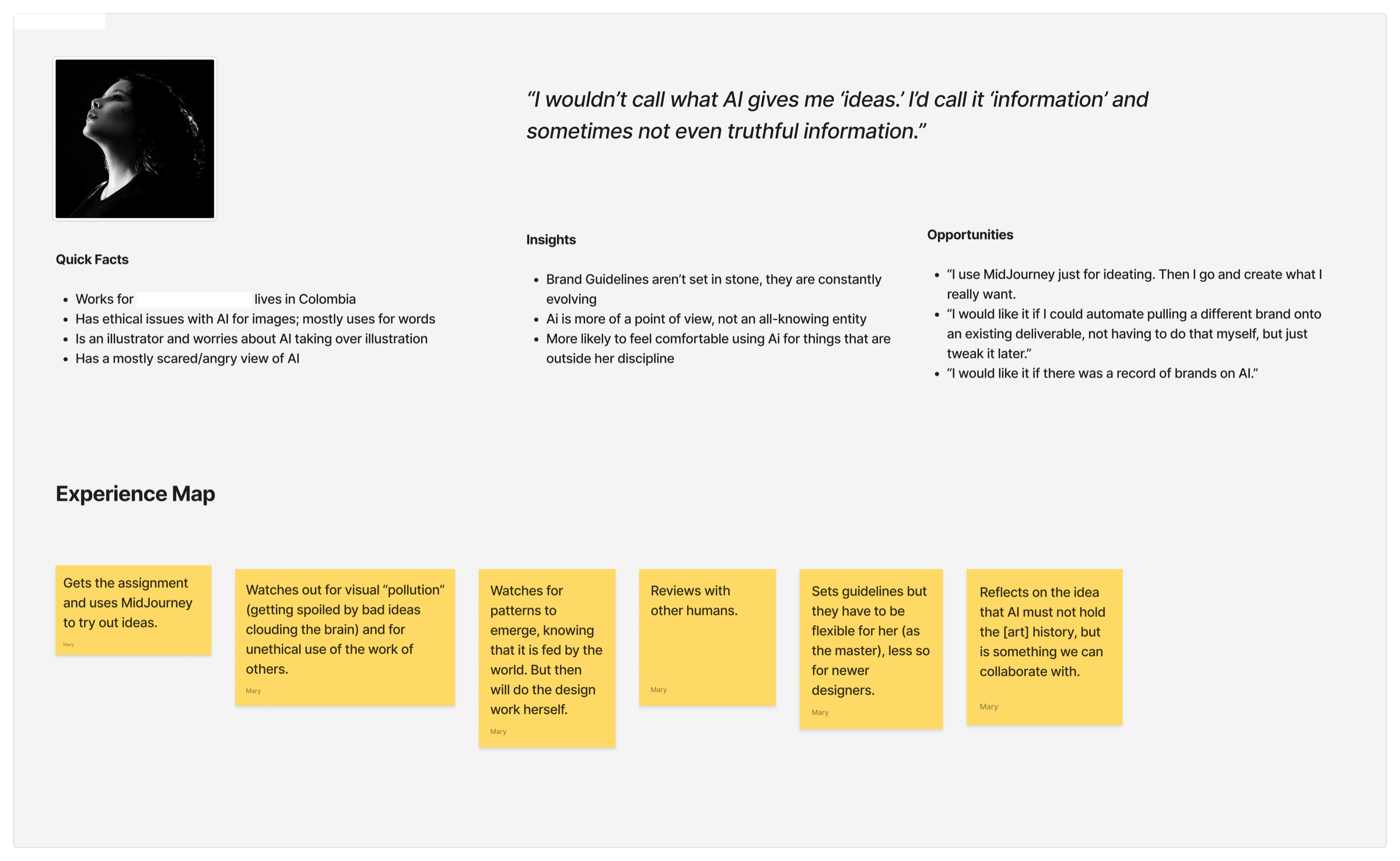
Insights
Through our user interviews, we identified distinct goals and pain points for both creators and managers. BrandKey's design was then focused on automating the integration of brand guidelines into AI prompts, reducing repetitive tasks while ensuring that all AI-generated assets adhere to established brand standards. This automation allows creators to maintain creative control and fosters consistency across teams through seamless guideline updates and the sharing of approved AI tools. Managers can monitor and score AI-generated content against brand attributes, ensuring ongoing brand integrity. Additionally, BrandKey provides actionable data on brand consistency, enabling informed decision-making and continuous improvement.
Story Mapping
Based on insights from multiple user interviews, we created a Story Map for our MVP (minimum viable product) to ensure our design and development were focused on real user goals and challenges. The Story Map outlines high-level activities, tasks, sub-tasks, and system actions, helping us validate user experiences, define project scope, estimate complexity, and plan development sprints. This structured approach allowed us to prioritize features that directly address user needs and streamline our development process.
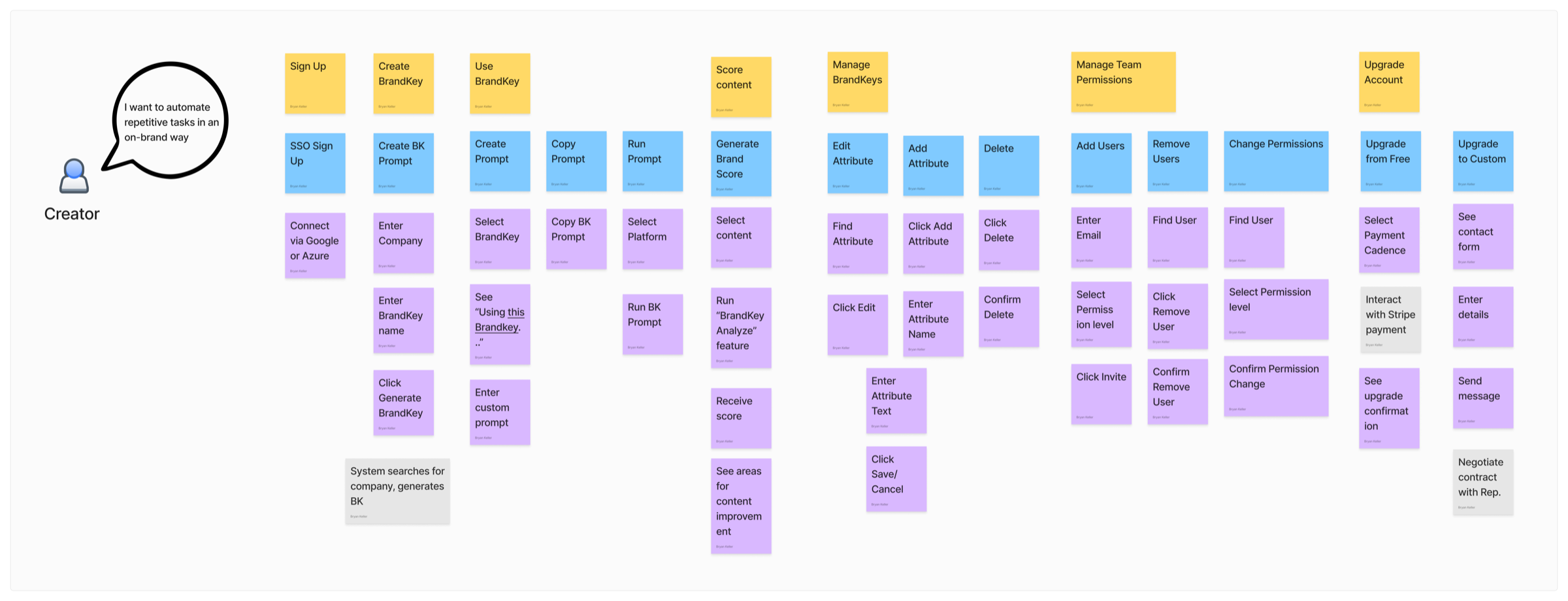
UI Design
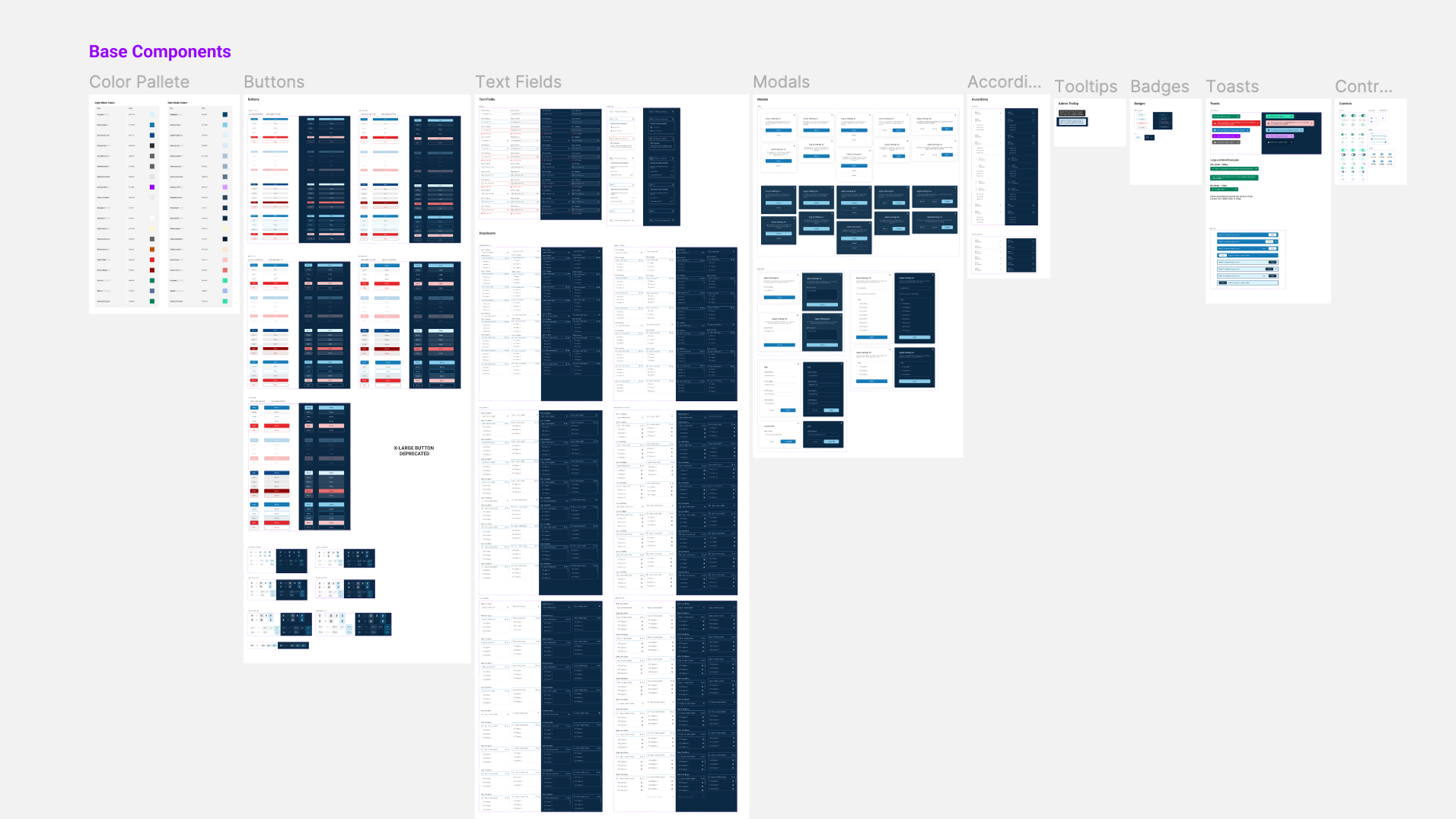
After defining our business position, target users, and revenue strategies, we focused on designing BrandKey's user interface. Our main goals were to create a modern and intuitive experience suitable for the AI/chatbot ecosystem, ensure users could easily accomplish their tasks, develop reusable components within a robust design system, and design adaptable layouts for various devices. This approach ensured that BrandKey was both user-friendly and scalable, effectively meeting the diverse needs of our users.
Specifically, our concerns were:
- Crafting a fresh, modern experience that would live comfortably in the emerging AI/chatbot ecosystem
- Making clear paths to accomplish the goals of our user types
- Strategic, reusable components based on a solid design system
- Adaptable layouts that can easily be implemented for various canvases.
Try clicking through this prototype, or use the Figma navigation bottom center to navigate.
Outcome
During development and testing of BrandKey, the client pivoted to integrating our prototype into their larger AI product, Synthia to open their potential market to creative professionals and brand managers.
Take the Next Step
Ready to get your digital projects done efficiently and effectively? Let's turn your vision into reality without the hassle. Our expertise in Lean Canvas and continuous discovery means we don't just plan—we deliver.
Contact Us Today to kickstart your journey toward tangible results and accelerate your success and visibility in the digital landscape.